 Skip to content
Ground source energy systems explained
Geoexchange systems—or ground-source heat pump systems—are more than just another HVAC solution; they’re a game-changer. These systems use the earth’s consistent temperature to provide heating and cooling, offering significant operational savings, reduced carbon footprints, and improved long-term reliability. These systems create a recycling of energy using a ground-coupled heat exchanger (piping underground), a HVAC system (such as a heat pump, 2/4 pipe fan coil, etc.), and a distribution system (forced air or radiant) to circulate warm or cool air throughout a building.
- In the summer, heat from the building is stored in the ground in order to keep the building cool.
- In the winter, the stored heat in the ground from the summer is retrieved for more efficient heating during the winter months.
Geo-exchange versus Geothermal Energy
The temperature of the ground needs to be considered and balanced with every system. True geothermal energy – common in places such as Iceland – takes advantage of the core heat of the earth, while ground source systems instead use the earth as a thermal battery, exchanging energy in the winter and summer with the neutral earth conditions.
Adopting this technology is not as simple as installing another piece of equipment. Geoexchange systems are deeply integrated into a building’s design, requiring careful planning and a nuanced understanding of thermodynamics, geology, and the dynamic nature of buildings and their HVAC systems to balance the amount of energy being stored and extracted from the ground on an annual basis.
How it works
HVAC SYSTEM
A HVAC system, such as a heat pump, is located inside the building and uses compression to either create heating or cooling. It is connected to the ground-coupled heat exchanger (GHX) and circulates a fluid through the GHX in order to store/retrieve energy
Ground-coupled heat exchanger (GHX)
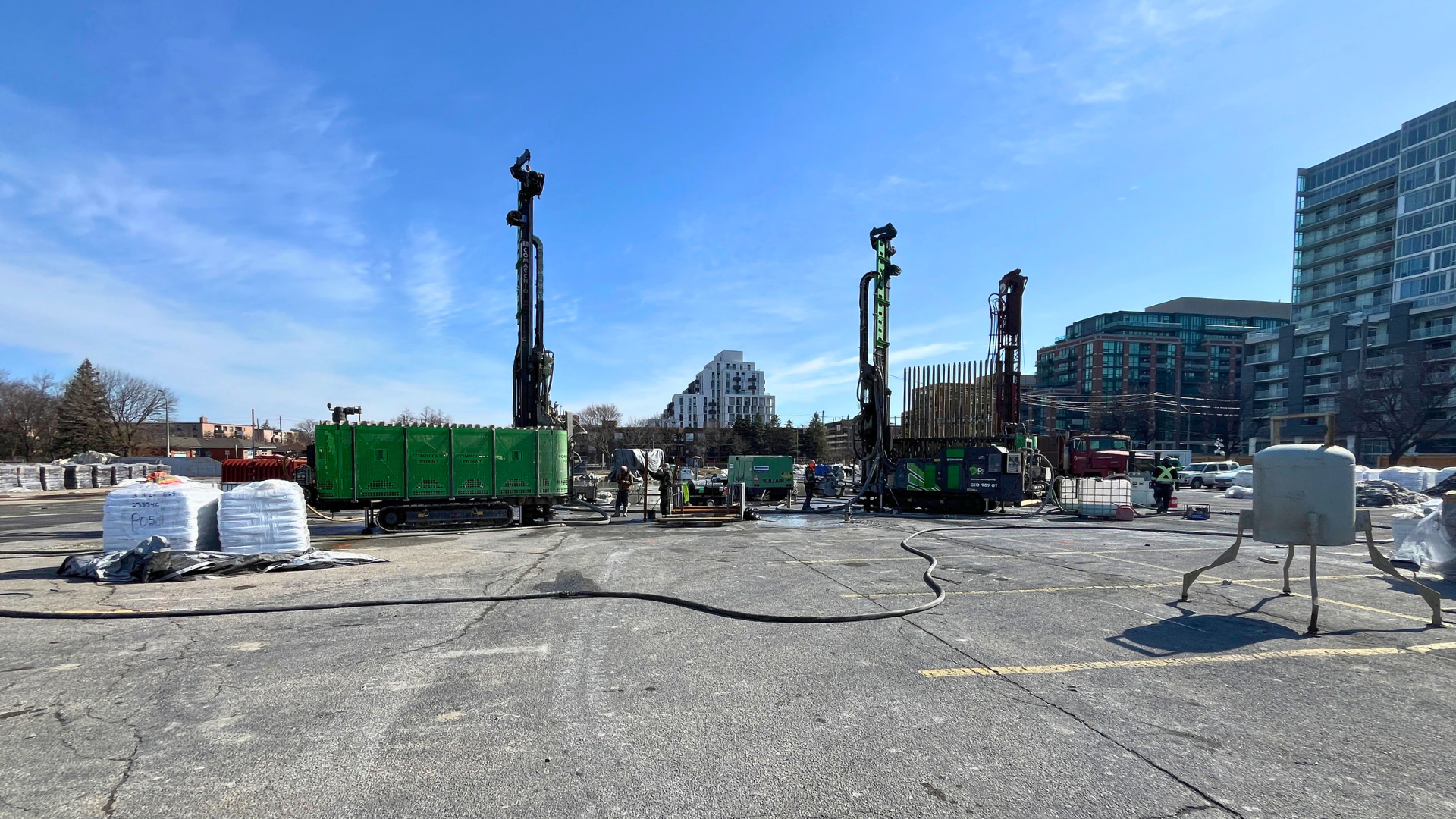
A ground-coupled heat exchanger is underground piping that is in contact with the earth to store or retrieve energy. There are both closed and open-loop underground piping systems.
Distribution system
A distribution system moves the heating and cooling energy throughout the building. The HVAC system can take many forms in commercial applications, including traditional heat pumps, Variable Refrigerant systems, or central plants with fan coils/ air handlers. It is up to the building design team to find the best solution for the intended application.